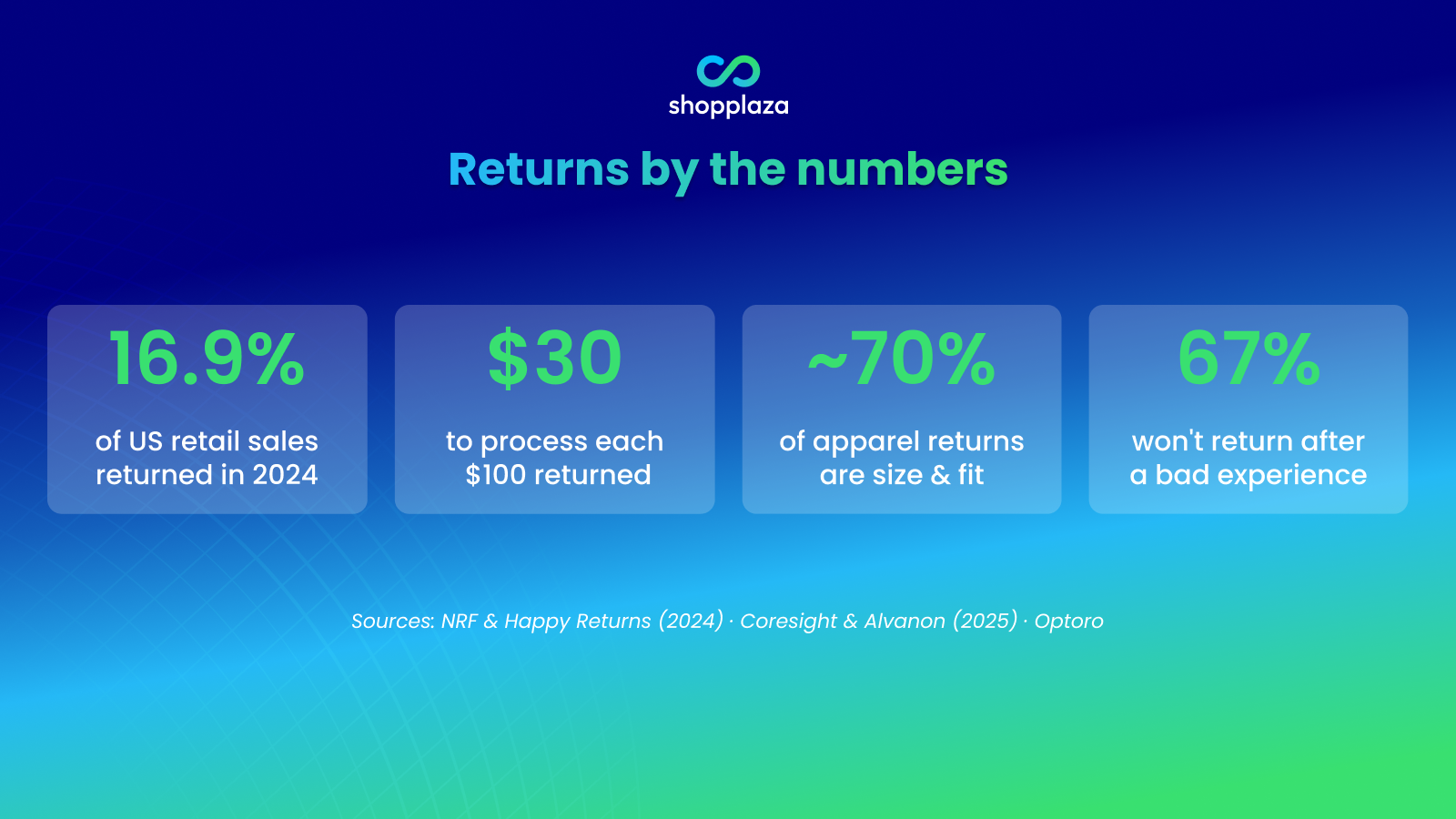
Returns hurt. According to NRF and Happy Returns (2024), US retailers were on track for roughly $890 billion in returns in 2024 — about 16.9% of all retail sales. For online stores, the cost lands heavier still: every $100 of returned product costs retailers around $30 to process (RILA Link Returns Panel, via Optoro).
So it makes sense that many Shopify merchants want to cut returns. The trap is that the loudest “fixes” can create new problems. Charging customers for returns, cutting the window too short, adding restocking fees, or hiding the policy may reduce some return requests in the short term — but they often hurt conversion, trust, and repeat purchase more than they save. The same NRF research found that 67% of consumers say a bad return experience would discourage them from shopping with that retailer again, and 76% consider free returns when choosing where to shop.
A better approach is to reduce avoidable returns at the source — before the order ever ships.
The short answer: to reduce returns on Shopify without hurting customer experience, focus on preventing the wrong purchase before checkout. Improve product pages with clear sizing, accurate photos, detailed product specs, honest reviews, and expectation-setting emails. Then use return-reason data to fix high-return SKUs, offer exchanges before refunds, and keep your return policy clear and fair.
This guide covers 8 practical strategies to lower your return rate without making the shopping experience harder for good customers.
📌 Key takeaways before you dive in:
- About 16.9% of US retail sales were returned in 2024, costing retailers roughly $30 per $100 returned — but strict return policies (paid returns, short windows, fees) often hurt repeat purchase more than they save.
- The best way to reduce Shopify returns is to prevent avoidable returns before checkout: better product pages, clearer sizing, accurate photos, and stronger expectation setting.
- For apparel, footwear, and other fit-sensitive products, size and fit clarity is often one of the highest-impact return prevention tactics.
- Track returns by reason and SKU, then improve the listing, fix the product, offer exchanges, or retire products that keep creating avoidable returns.
Why Reducing Returns Starts Before the Return Request
Returns themselves aren’t the enemy. Bad returns are.
A shopper who returns one item but stays loyal can still be valuable. A shopper who never returns anything but also never buys again isn’t a win. So the goal shouldn’t be “how do we stop customers from returning products?” A better question is: “why did this customer end up with the wrong product in the first place?”
Most avoidable returns start upstream of the return request. They start on the product page — in the size chart, the product photos, the description, the variant selector, or the expectations set after purchase. If shoppers buy with unclear expectations, returns become more likely.
⚠️ Tactics that may look like wins but can hurt customer experience:
- Charging for returns. 76% of shoppers consider free returns when choosing where to shop (NRF & Happy Returns 2024). Fees may reduce some requests, but they often cost more in lost conversion and repeat purchase.
- Very short return windows. A 7-day window looks strict but can reduce trust — shoppers often check the policy before they buy.
- Restocking fees. Visible reputation damage on social and review sites, especially when the product didn't match the page.
- Hiding the return policy. If shoppers can't find it, many won't feel safe enough to buy.
The better strategy: reduce unnecessary returns while keeping the necessary ones easy, fair, and clear.
Where Shopify Returns Usually Come From
Before you fix returns, diagnose them.
In Shopify, the cleanest way is to capture a return reason on every refund or exchange. You can use Shopify’s built-in return reason field, or a returns app like Loop, AfterShip Returns, or ReturnGO. Then track data by:
- Reason: size/fit, wrong item, damaged, not as described, changed mind, arrived late, quality issue
- SKU: Which products are responsible for a disproportionate share of returns?
- Product type: Are apparel, footwear, fragile products, or high-AOV items returning more often?
- Customer behavior: Are shoppers buying multiple sizes and returning extras (bracketing)?
- Channel: Do paid social shoppers return at different rates than organic or email shoppers?
- Supplier or vendor: Are certain suppliers linked to higher return rates?
Once you can see the pattern, you can choose the right fix. If most returns are due to damaged products, focus on packaging and fulfillment. If returns are due to “not as described,” improve photos and product details. If returns come from the wrong size, improve size charts, fit notes, measurement guidance, and size recommendations.
For apparel stores specifically, this matters a lot. Coresight Research and Alvanon (2025) estimate that around 70% of online apparel returns trace to size and fit issues. If your return reasons show the same pattern, strategy #1 below should be your first priority.
8 Ways to Reduce Shopify Returns Without Hurting Customer Experience
1. Make sizing clear on the product page
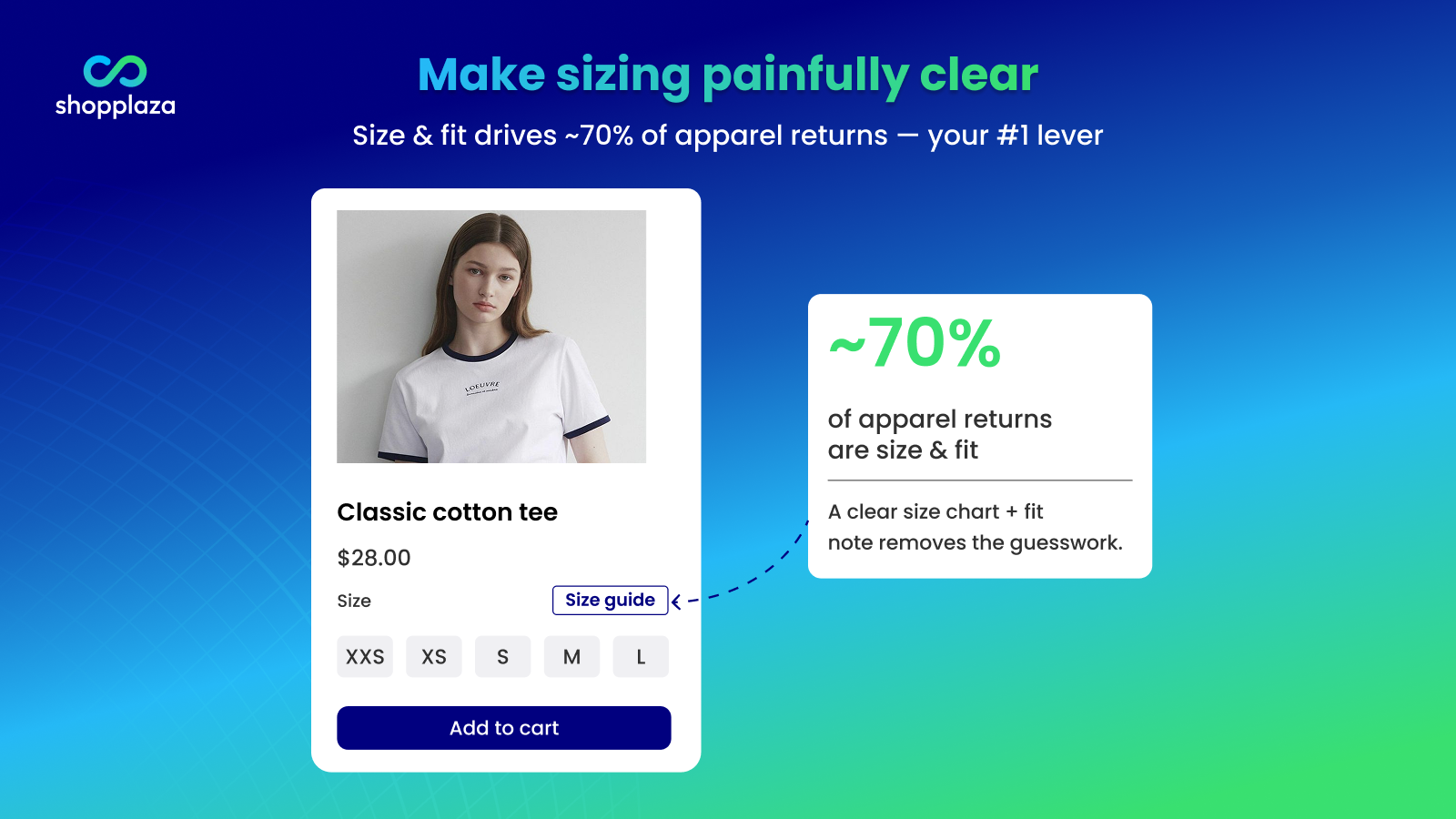
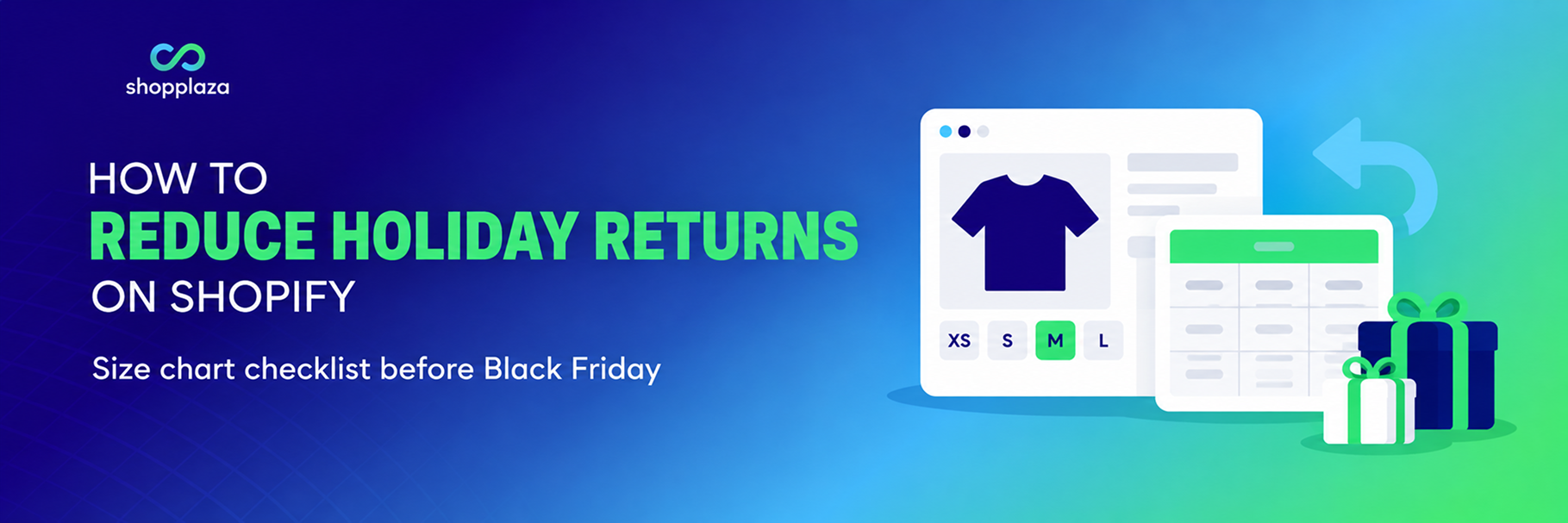
If you sell fit-sensitive products — apparel, footwear, jewelry, pet accessories, kidswear, uniforms, swimwear, accessories — size clarity is one of the most important return-prevention tactics. A clear size chart can cut one of the biggest reasons shoppers send items back: uncertainty about size and fit.
What works:
- Display a clear, accurate size chart near the size selector. Don’t bury it in the footer or on a page shoppers may never find. For setup options, see our complete Shopify size chart guide.
- Add fit notes on the product page — short lines like “runs small,” “true to size,” “relaxed fit,” or “non-stretch fabric” so shoppers self-correct before checkout.
- Show model height and size worn on apparel photos. “Model is 5’9” wearing size M” is one of the most useful sentences on a fashion PDP.
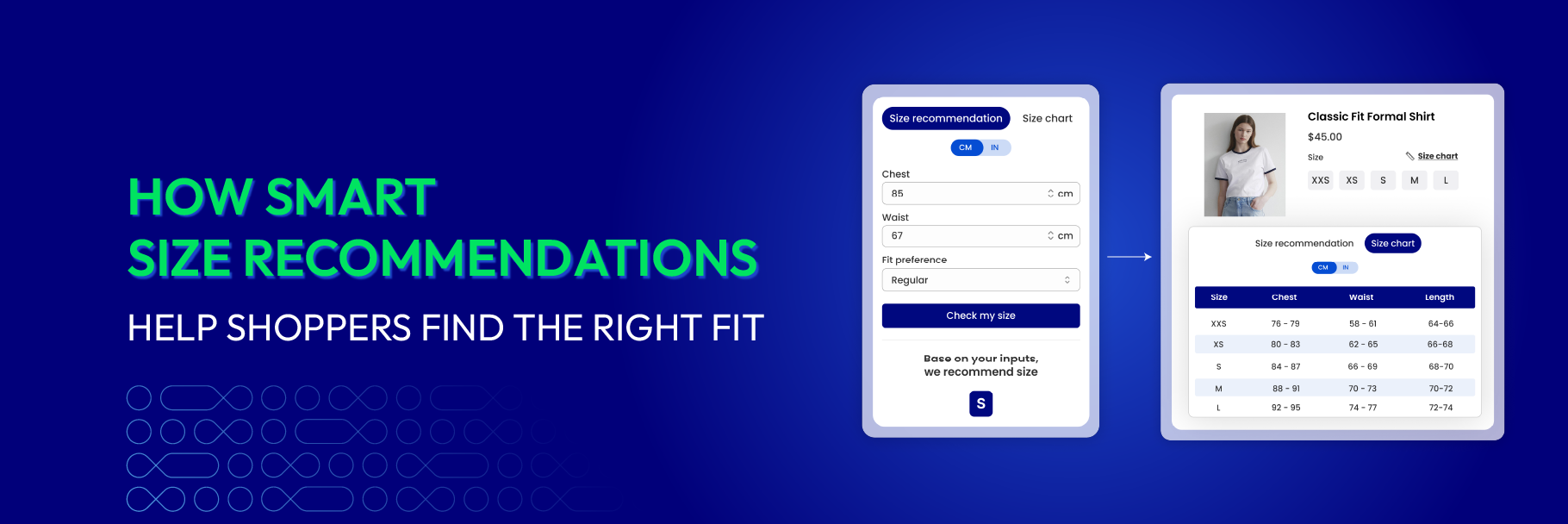
- Use smart, AI-powered size recommendations when a static chart isn’t enough — they guide each shopper to a size based on body measurements, usual size, or fit preference.
If you’d rather not build this by hand, a size chart app such as MP Size Chart & Size Guide adds charts, a size guide page and AI size recommendations (beta) to Shopify product pages from a free plan.
For apparel stores specifically, see our deeper guide on how to reduce clothing returns caused by size and fit issues. For a real-world example, see how one apparel store improved fit confidence and reduced returns with a clearer size guide.
2. Show the product as it really is
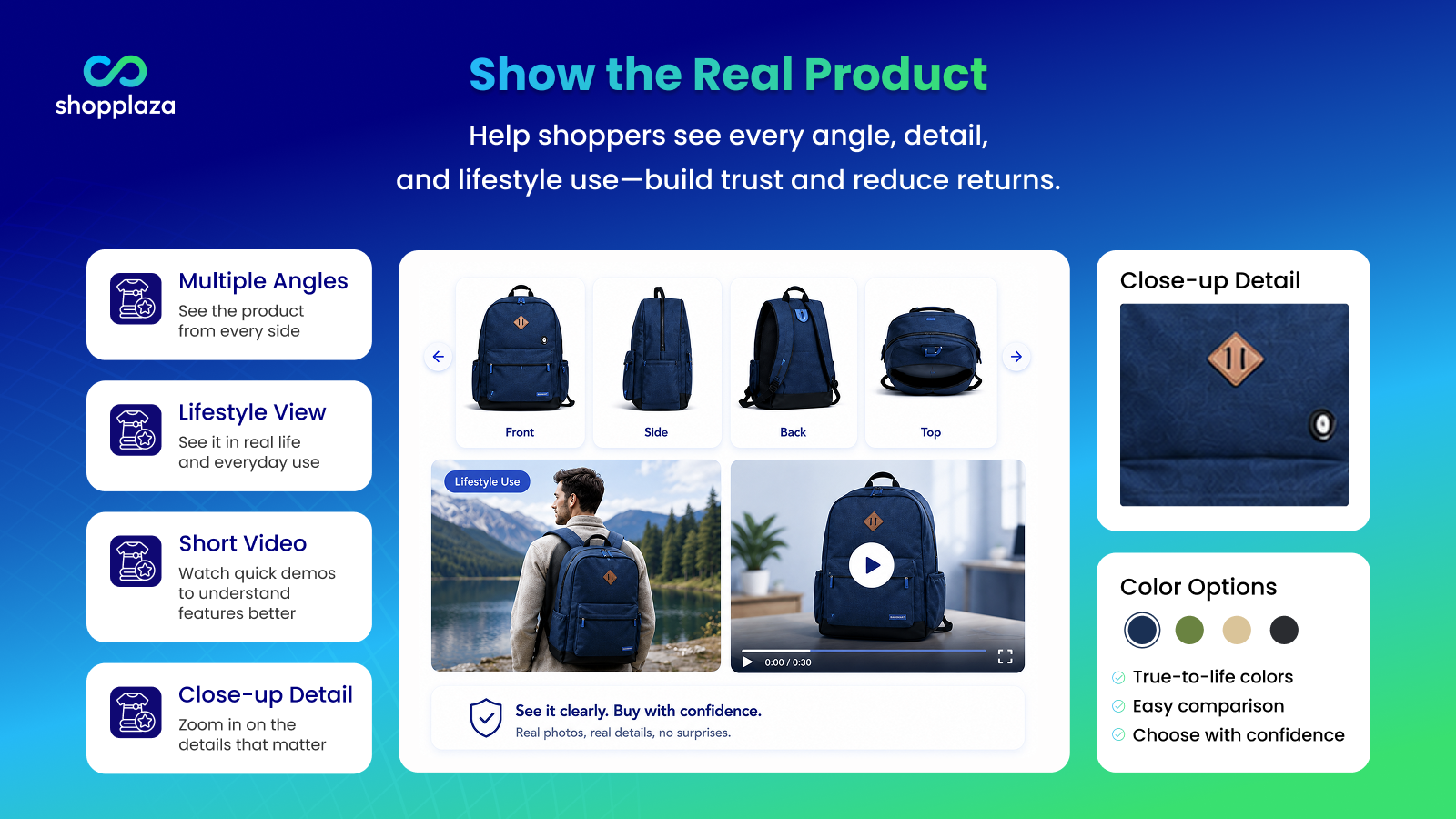
A shopper who receives something that looks different from the product page is one bad surprise away from a return. The cure is fewer surprises — visuals that help shoppers understand the item before they buy.
- Multiple angles: front, back, side, detail shots, and zoomable images
- Lifestyle photos: the product worn, used, or placed in a real setting — not just a white background
- Short product videos (15–30 seconds) for items where fit, motion, drape, texture, or scale matters
- 360° views for furniture, electronics, bags, and complex products
- True-to-colour photography: consistent lighting prevents colour-related returns
These visuals belong in the product media gallery, not only on Instagram, collection banners, or ads. If the texture, color, size, or use case matters, show it before checkout.
3. Make product details unmistakable
Vague specs create unmet expectations. Unmet expectations create returns. Every product page should clearly answer what the customer is buying, how it works, what it’s made of, and what’s included.
- Exact dimensions with clear units (inches and centimeters)
- Materials and weight — e.g., “100% cotton, 200 GSM”
- Care instructions — washing, drying, ironing, storage
- Intended use — “everyday casual,” “formal occasion,” “indoor use only”
- What’s in the box — parts, accessories, batteries, manuals, assembly requirements
- Compatibility details — especially for electronics, accessories, parts, or tools
It sounds boring. Boring product specs prevent returns. If the same kind of detail applies across many SKUs, use Shopify metafields so your team can keep dimensions, materials, and care info consistent at scale.
4. Surface honest, photo-rich reviews on the product page
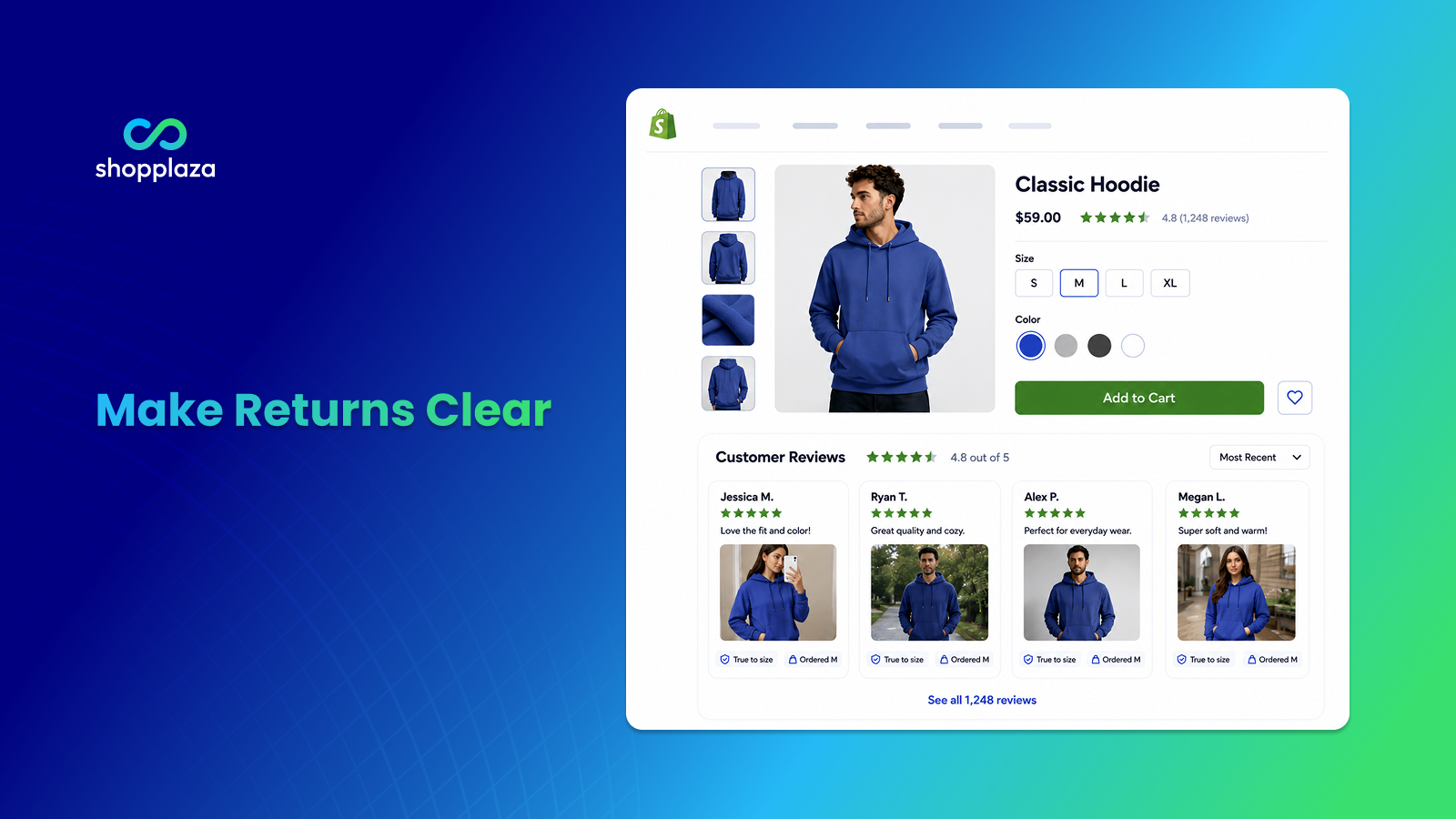
Reviews reduce returns when they help shoppers set better expectations. Photo-rich reviews are especially useful because they show the product in real use, not just in studio conditions.
For apparel and fit-sensitive products, reviews should do more than collect star ratings. A strong setup includes:
- Customer-uploaded product photos
- Fit feedback (“runs small,” “true to size,” “runs large”)
- Customer height, usual size, and size ordered
- Review filters by size, body type, or use case
- A fit summary near the top of the review section
“I’m 5’8”, 140 lb, ordered M, and it fits perfectly.”
A single review like that can answer a sizing question better than a generic description. For non-apparel products, photo reviews can show scale, colour accuracy, packaging, material, or how the product looks in a real environment.
5. Set expectations before the package ships
Returns don’t only happen because of what shoppers know before checkout — they also happen because of what they expect before the product arrives.
A pre-shipment email — sent the day before delivery — is an underused return-prevention tool. Examples by category:
- For apparel: fit tips for the specific item ordered, e.g., “This dress runs slim through the bust.”
- For footwear: tips for checking fit indoors before wearing outside
- For furniture: assembly time estimate, tools needed, manual link
- For electronics: setup instructions, charging tips, compatibility reminders
- For consumables: usage tips for the best result
You can run this from Shopify Email, Klaviyo, Omnisend, or your existing post-purchase flow. The goal is simple: help shoppers know what to expect before unboxing.
6. Write a clear, fair returns policy — and put it where shoppers can see it
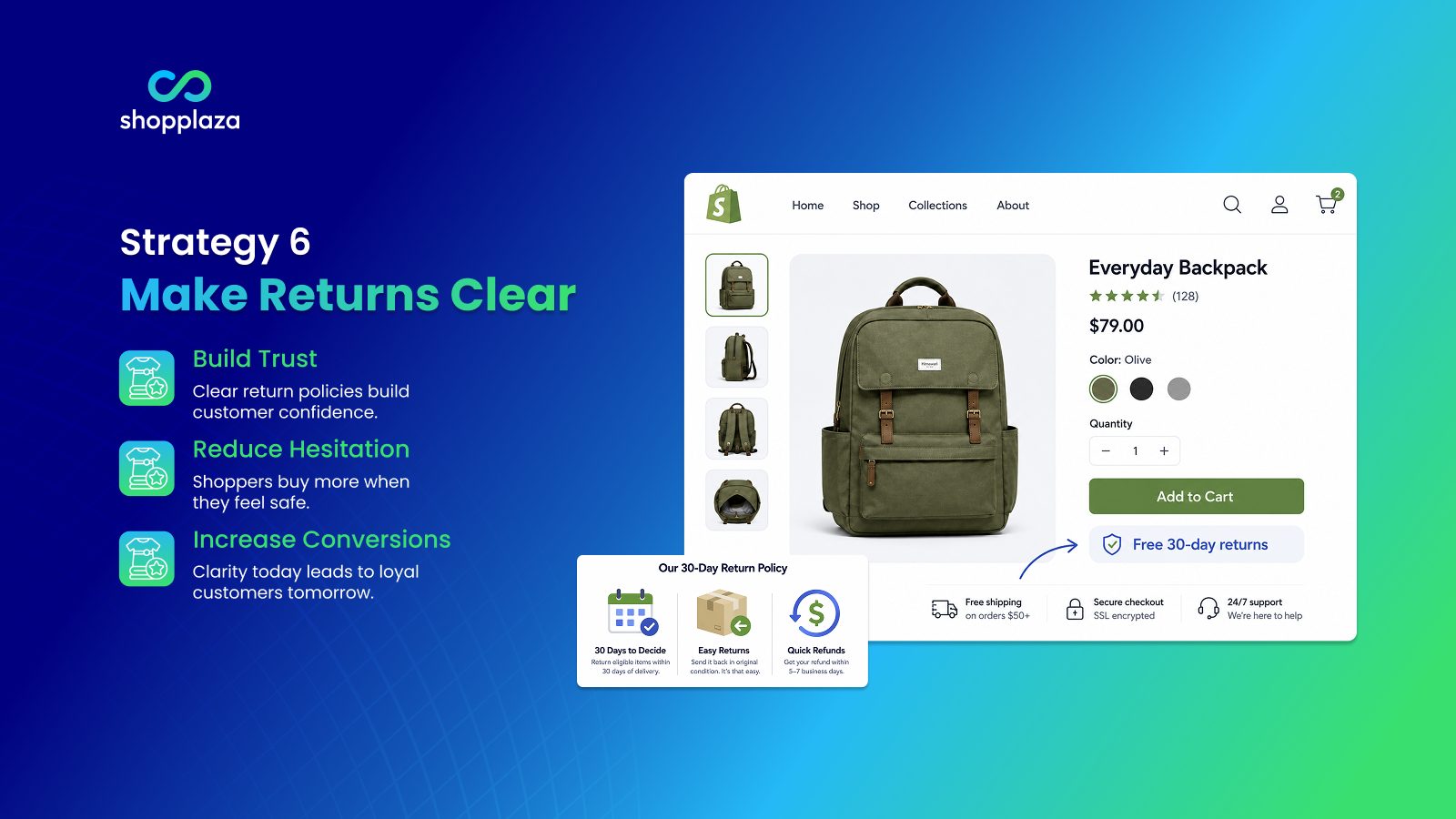
A good return policy isn’t just a defensive document. It’s part of the buying experience. A clear policy helps shoppers feel safe before they buy; a hidden or confusing one creates doubt.
A customer-friendly policy should be:
- Short and easy to scan (under 200 words for the core text)
- Written in plain language, no legalese
- Visible on the product page, cart, footer, and help center
- Clear about the return window
- Clear about product condition requirements
- Clear about refunds, exchanges, store credit, and return shipping
- Clear about exceptions (final sale, personalized, hygiene-sensitive, made-to-order)
30 days is a common baseline for most retail. Some brands extend to 60–90 days or longer; others use shorter windows for final-sale or personalized products. The point isn’t to copy another brand’s policy — it’s to make yours easy to understand before checkout.
A small product-page badge like “Free 30-day returns” or “Easy size exchanges” can help reduce hesitation when it’s true and easy to follow. The data backs this up: NRF/Happy Returns found that 84% of consumers are more likely to shop with retailers that offer no-box / no-label returns and immediate refunds.
7. Offer exchanges before refunds in your returns flow
When the reason is “wrong size,” an exchange can save the sale. A refund ends the order — an exchange keeps the customer and may protect revenue.
Most modern returns apps (Loop, AfterShip Returns, Returnly) let you design the return flow. Use that flow to make exchanges easy where they make sense:
- Make “exchange for a different size” the first visible option for size-related returns
- Show refund as a secondary option, not the only path
- Recommend the next best size based on the return reason
- Offer store credit as an option
- Consider a small store-credit bonus (5–10%) for shoppers who choose credit over a refund
Don’t force exchanges — the return experience should still feel fair. But if a shopper says the item is too small, your store can guide them toward the right size before sending them straight to a refund.
8. Analyze return reasons by SKU — then act
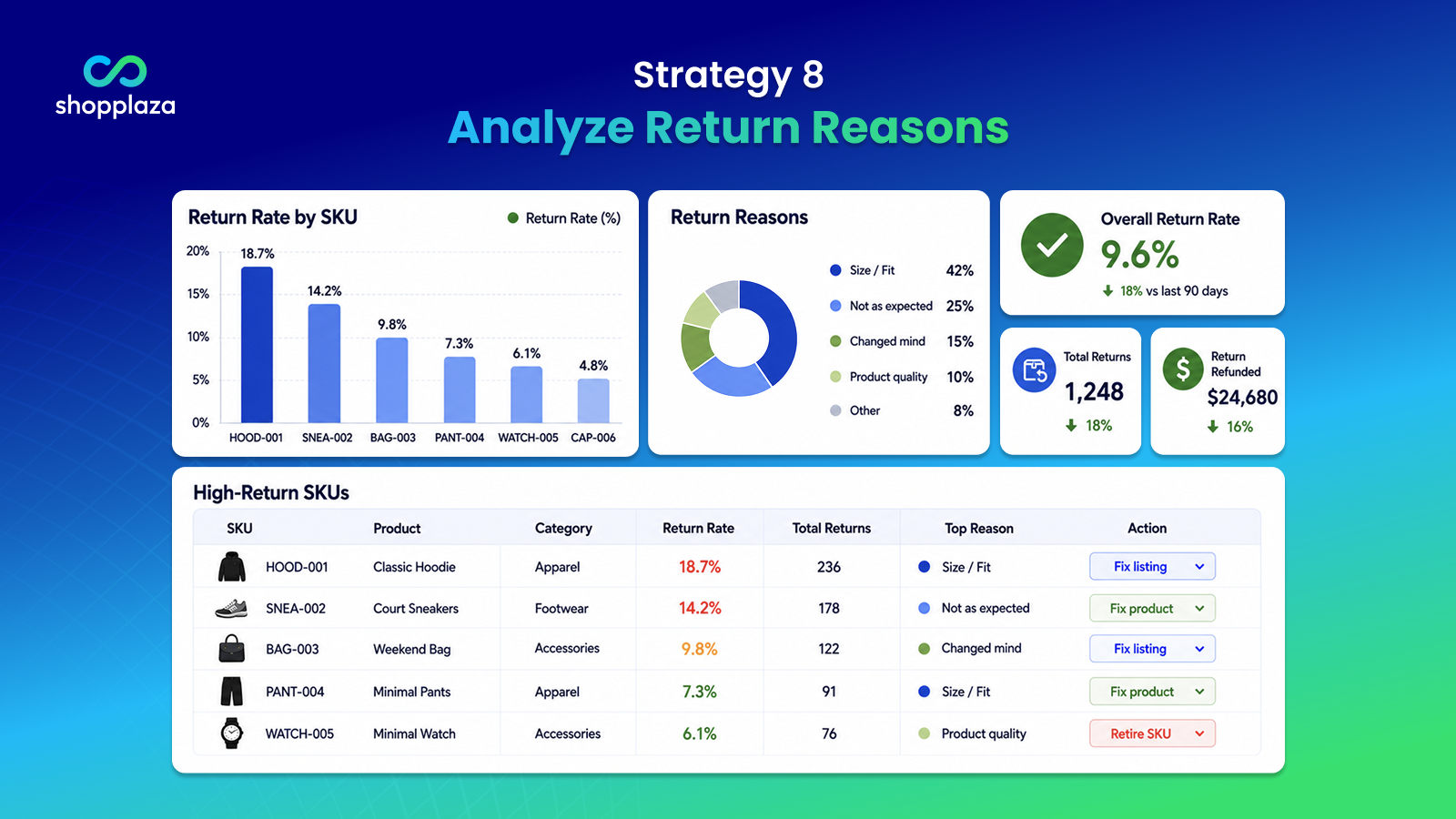
The Pareto principle hits returns hard: a small number of SKUs typically drive a disproportionate share of returns. That’s why return data shouldn’t only be reviewed at the store level — segment by SKU, product type, and reason.
Once your return data is clean, ask:
- Which products have the highest return rate?
- Which products have the most size-related returns?
- Which products are returned because they look different from the photos?
- Which products arrive damaged most often?
- Which suppliers are linked to the highest returns?
- Which products are refunded instead of exchanged?
Then act on it:
- Fix the listing first. Better photos, descriptions, size charts, fit notes, model height, material details, product specs.
- Fix the product. If items consistently run small, arrive damaged, or fail quality checks, work with the supplier or change the product.
- Review whether to keep the SKU. If returns stay above ~40% after listing and product fixes, the product probably isn’t worth selling.
Exporting returns data from Shopify or your returns app once a month is enough to make this a habit, not a project.
What is bracketing, and how should Shopify stores handle it?
Bracketing is when a shopper buys multiple sizes, colors, or variants of the same product with the intention of keeping one and returning the rest. It’s common in apparel, footwear, and fit-sensitive categories because shoppers aren’t always confident which option will work. NRF and Happy Returns found that 51% of Gen Z shoppers report bracketing.
The wrong response is to punish every customer for behavior that often comes from uncertainty. The right response is to reduce the need for bracketing:
- Improve pre-purchase size guidance (strategy #1 above)
- Add fit notes and model height
- Use photo-rich reviews with fit feedback
- Add AI size recommendations for high-uncertainty products
- Track serial returners separately
- Adjust policies only for clear repeat-abuse patterns
Common return-reduction mistakes to avoid
Reducing returns shouldn’t mean making the shopping experience worse. Avoid these:
- Optimizing only for return rate instead of profit per shopper. A 5% return rate with shoppers who never come back is worse than a 12% return rate with shoppers who reorder three times a year.
- Treating all returners the same. A loyal customer who occasionally returns is different from a serial returner with 80%+ return behavior.
- Using too many final-sale rules. If shoppers feel trapped, you’ll trade returns for chargebacks, complaints, and bad reviews.
- Ignoring return-reason data. It’s the cheapest customer research you have.
- Only fixing the back end. A returns app makes returns smoother; it doesn’t lower the number of returns. The pre-purchase fix does.
- Hiding the returns policy. If shoppers can’t find it, they don’t feel safe enough to buy.
- Blaming customers before checking product-page clarity. If many shoppers return the same SKU for the same reason, the product page (or product) probably needs work.
Conclusion
Returns aren’t going away. But they don’t have to drain your margin or damage your customer experience.
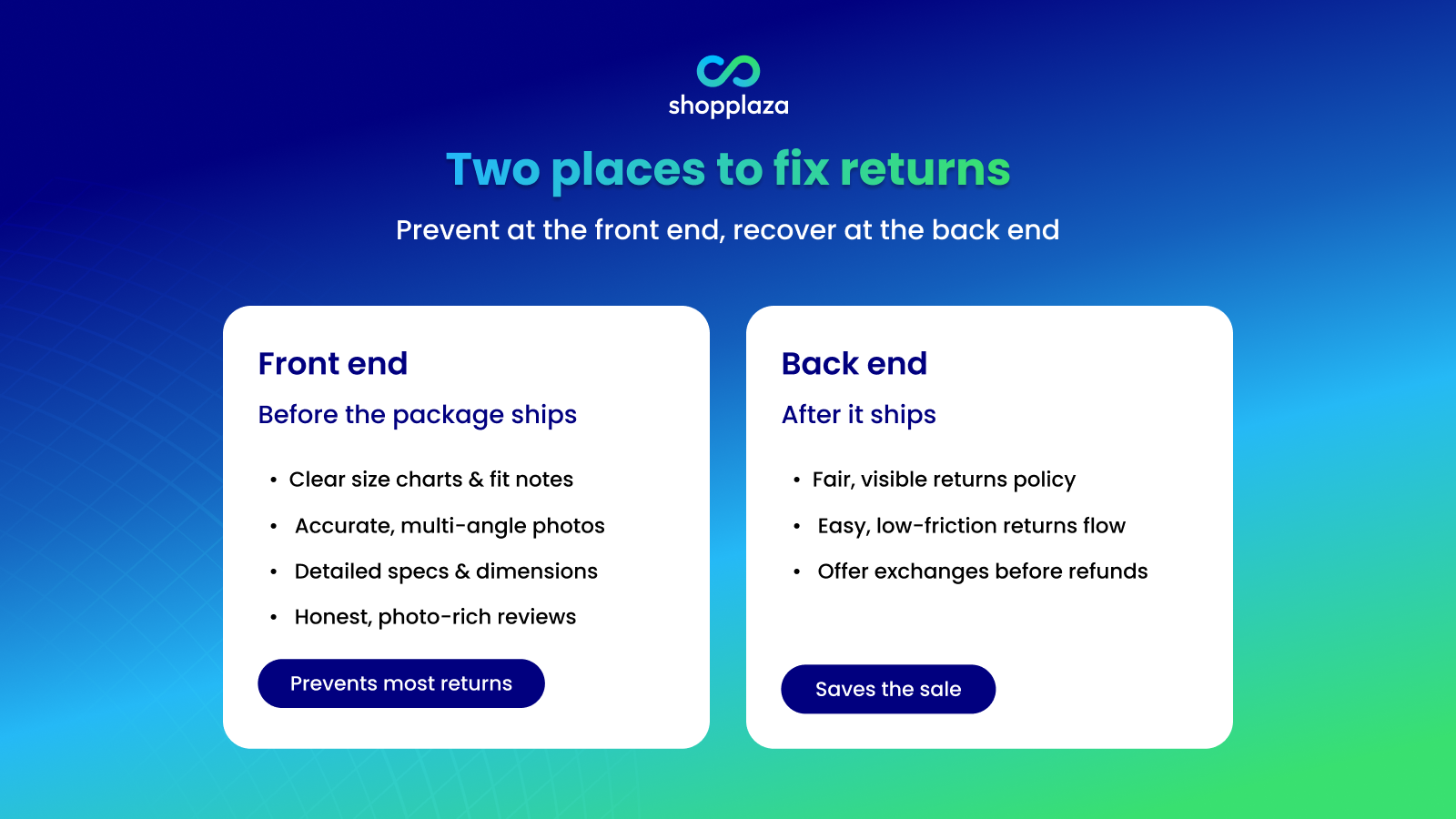
The best Shopify return strategy works on two levels. First, improve the front end — product pages, size guidance, photos, descriptions, reviews, and expectation-setting emails. This reduces avoidable returns before they happen. Second, improve the back end — clear policies, fair return flows, exchange-first options, and return-reason tracking. This keeps the necessary returns easy to manage and less damaging to customer loyalty.
If sizing is one of your biggest return drivers — as it often is for apparel, footwear, and fit-sensitive products — start with clearer size charts, fit notes, and smart size recommendations on the product page. That’s where the highest-leverage front-end work pays back fastest, and where most of your avoidable returns are quietly being created today.
Frequently asked questions
Why are returns so high on Shopify stores?
Shopify stores can see high return rates when shoppers don’t have enough information before buying. Common causes include unclear sizing, inaccurate photos, vague descriptions, damaged products, wrong items, and unclear expectations. Online stores generally face a higher return risk than physical retail because shoppers can’t see, touch, or try products before checkout.
What is the best way to reduce returns on Shopify?
Prevent avoidable returns before checkout. Start by tracking return reasons. Then improve the product page — clearer sizing, better photos, detailed product specs, honest reviews, and clear return policy information. After that, improve the returns flow with exchange-first options and SKU-level analysis. Punitive policies (paid returns, short windows, restocking fees) usually cost more in lost conversion than they save in returns.
Will charging customers for returns lower my return rate?
It can, marginally — but at a real cost. NRF/Happy Returns research found that 76% of shoppers consider free returns when choosing where to shop, and 67% won’t return after a bad returns experience. Most stores that switch to paid returns see conversion and repeat-purchase rates fall by more than the savings from returns.
What is a typical return rate for a Shopify apparel store?
Industry estimates put online apparel and footwear return rates around 23.4% (Coresight & Alvanon, 2025), with size and fit accounting for roughly 70% of those returns. Non-apparel categories typically run lower — often in the 8–15% range depending on price point and product type. Track your own return rate by SKU and reason rather than relying only on industry averages.
How long should my Shopify return window be?
30 days is a practical baseline for most retail. Many leading brands run 60–90 days; Zappos famously runs 365. Longer windows tend to lift conversion (shoppers feel safer buying) without a proportional increase in returns. Shorter or conditional windows are reasonable for final-sale, personalized, hygiene-sensitive, or made-to-order products — as long as the policy is clear before checkout.
How do I track return reasons in Shopify?
Shopify’s built-in returns feature includes a return reason field. For more structured tracking, a returns app (Loop, AfterShip Returns, ReturnGO) lets you capture detailed reason codes and export the data by SKU, customer, product type, or sales channel. Useful reasons include wrong size, too small, too large, not as described, damaged, wrong item, changed mind, arrived late, and product quality issue.
What is the fastest way to reduce sizing-related returns?
For fit-sensitive products, start with a clear size chart near the size selector, product-specific fit notes, and model height plus size worn on product photos. For higher impact, layer in AI size recommendations that suggest a size based on shopper measurements, usual size, or fit preference.
Should I offer free returns?
For most apparel and lifestyle stores, yes — free returns or free exchanges are major drivers of brand preference and repeat purchase. NRF/Happy Returns found that 84% of consumers are more likely to shop with retailers offering frictionless returns. If full free returns aren’t viable, consider free exchanges (paid refunds), free returns above a threshold, or generous store-credit terms.
How do I handle bracket-buyers without punishing other customers?
Address bracketing at the source — better size charts, AI size recommendations, photo-rich fit reviews. Then track serial returners separately in your CRM and adjust policy only for clear repeat-abuse patterns, not for first-time bracket-buyers (who are often your highest future-value customers).