Black Friday is November 27 this year. Whatever you sell between now and Christmas, a share of it will come back in January, and for apparel, footwear, and jewelry that share is bigger than the rest of the year.
According to NRF and Happy Returns, retailers expect their holiday return rate to run about 17% higher than their annual return rate, on top of an annual rate already estimated at 16.9% of sales. And Coresight Research and Alvanon put size and fit behind roughly 70% of online apparel returns.
Holiday orders make sizing harder in two specific ways. First, a large share of orders are gifts, so the buyer is guessing someone else’s size. Second, the return window stretches past Christmas, so the return lands in January, long after the sale is counted.
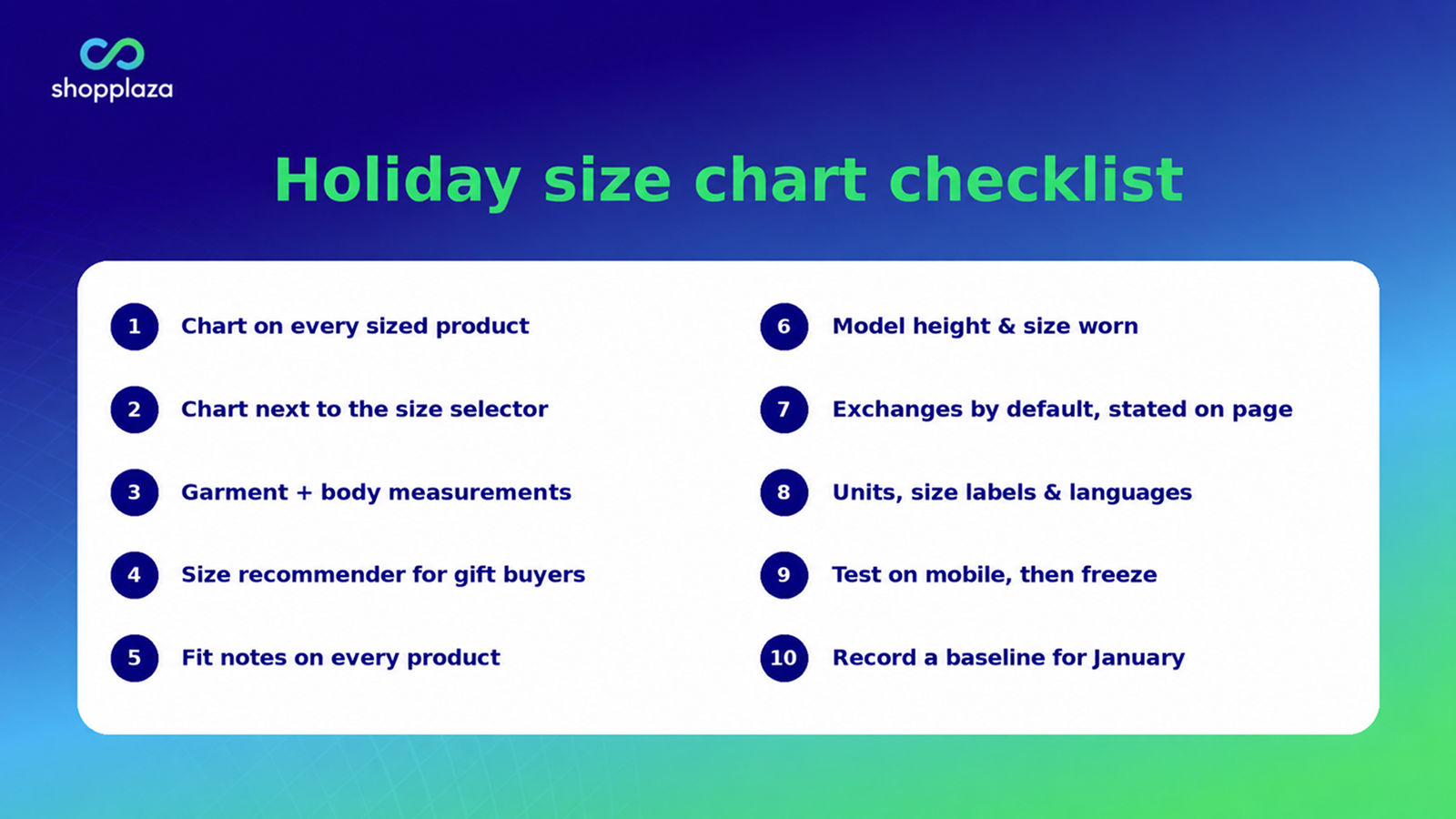
The short answer: you cannot fix January returns in January. The size chart, size guide, and fit information a shopper sees in November decide whether the gift fits. This checklist covers the 10 things to finish on your product pages before Black Friday, in the order that matters most.
For the all-season playbook, see how to reduce returns on Shopify without hurting customer experience. This article is only about the holiday window.
📌 Key takeaways before you dive in:
- Holiday return rates run about 17% above a store's annual rate (NRF & Happy Returns), and for apparel around 70% of returns are size and fit related (Coresight & Alvanon). Sizing is the biggest holiday return lever you control.
- Gift buyers do not know the recipient's measurements. A size chart alone is not enough for them; they need a size recommender, a "buying for someone else" path, and a clear exchange promise.
- Finish size chart work by mid-November. Changes made during the Black Friday weekend are risky and will not be indexed by shoppers who already have your products in their cart.
- Every item on this checklist is a product page fix, not a returns policy fix. Tighter policies cut trust in the holiday season; clearer sizing cuts returns.
Why holiday returns are a sizing problem first
Return reasons do not change much between seasons. What changes is who is buying and when they decide the item does not fit.
- Gift buying. The person at checkout is often not the person who will wear the item. They pick a size from memory, from a label they saw once, or by “she’s about my size.” That guess is the return.
- Extended return windows. Most stores stretch returns to mid or late January for holiday orders. The shopper has weeks to decide a sweater is “a bit snug,” which lowers the bar for sending it back.
- New, untested products. Holiday collections and bundles often launch without a chart at all, because they were added in a rush in October.
- Bracketing on sale items. Discounts make it cheap to order two sizes and return one. NRF reports that 51% of Gen Z shoppers say they bracket.
None of these are fixed by a stricter return policy. 76% of consumers say free returns are a key factor in deciding where to shop, and 67% say a bad return experience would stop them shopping with that retailer again (NRF & Happy Returns). In the one season where you are winning new customers, a hard policy is the wrong trade.
The fix is upstream: make the right size obvious on the product page before the holiday traffic arrives.
When to finish size chart work before Black Friday
Work backwards from November 27:
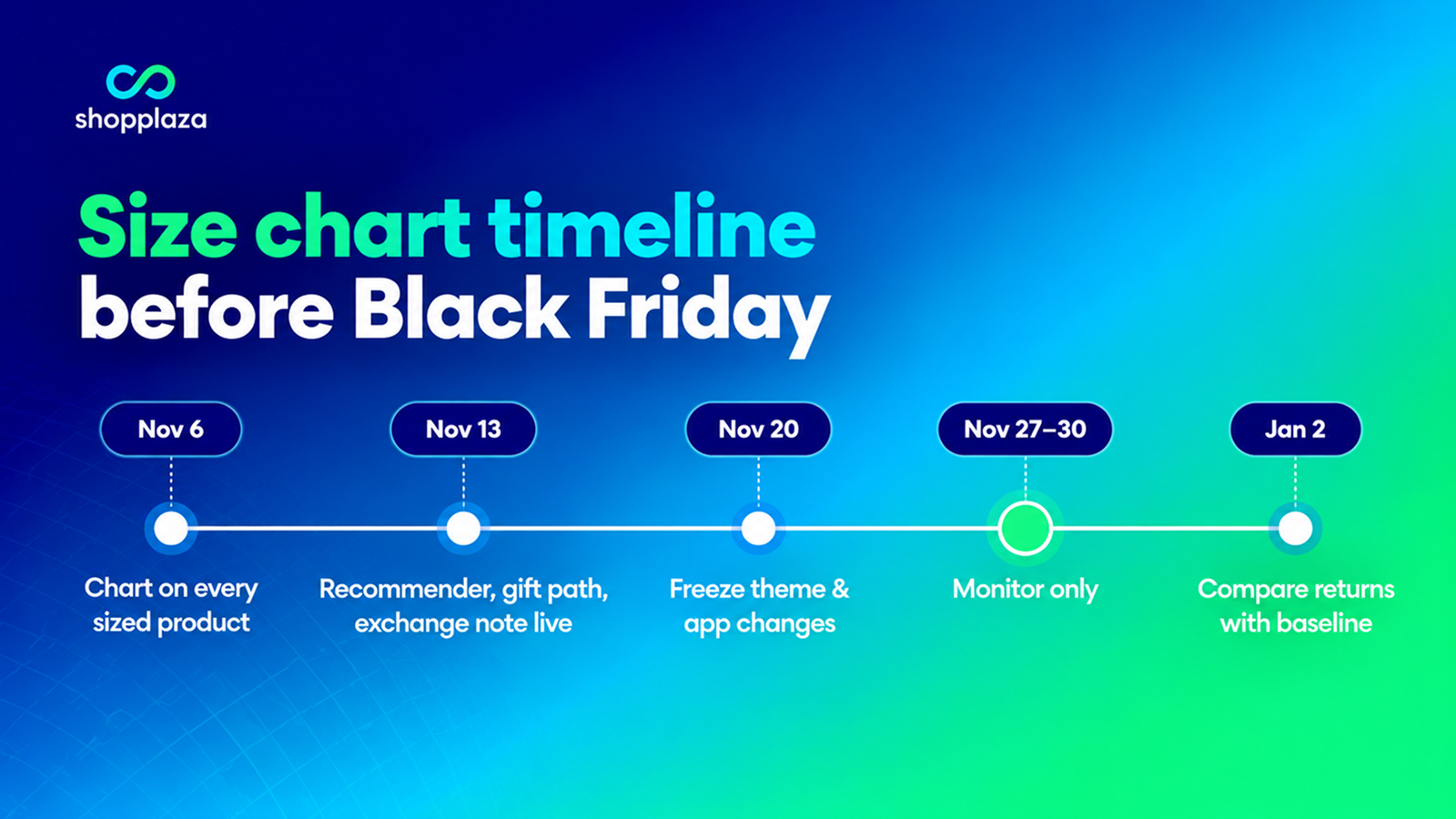
| Date | What should be done | Why |
|---|---|---|
| By November 6 | Every product that ships in a size has a chart assigned, including new holiday SKUs and bundles | Early gift shopping starts the first week of November; many stores run pre-BFCM sales from mid-month |
| By November 13 | Size recommender, gift path, and exchange messaging live; charts checked on mobile | Leaves two weeks for QA and for cached pages and ads to refresh |
| By November 20 | Size chart analytics baseline recorded; theme and app changes frozen | No new app installs or theme edits during the sale weekend |
| November 27 – 30 | Monitor only. Fix broken charts, do not redesign | A chart that disappears on Black Friday is worse than an imperfect one |
| January 2 onward | Pull return reasons by SKU and compare with the November baseline | This is where next year’s checklist comes from |
The 10-point size chart checklist to reduce holiday returns
Work through the items in order. The first four stop the most returns; the rest add fit confidence for gift buyers.
1. Assign a size chart to every product that has sizes, including new holiday SKUs
Audit first, then fix. Export your product list, filter for anything with a size option, and mark products with no chart. Holiday collections, limited drops, and gift bundles are the usual gaps because they were created after the main catalog.
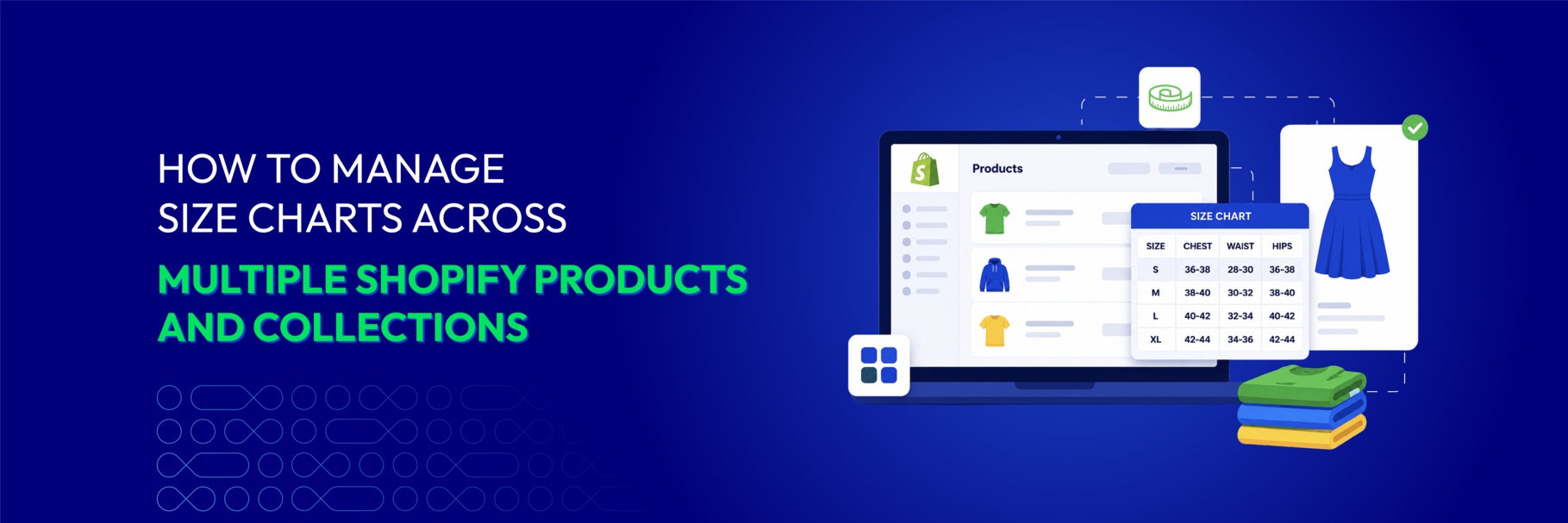
If you manage hundreds of products, assign charts by collection, tag, or product type rather than one by one. The guide to managing size charts across multiple Shopify products and collections walks through the bulk approach.
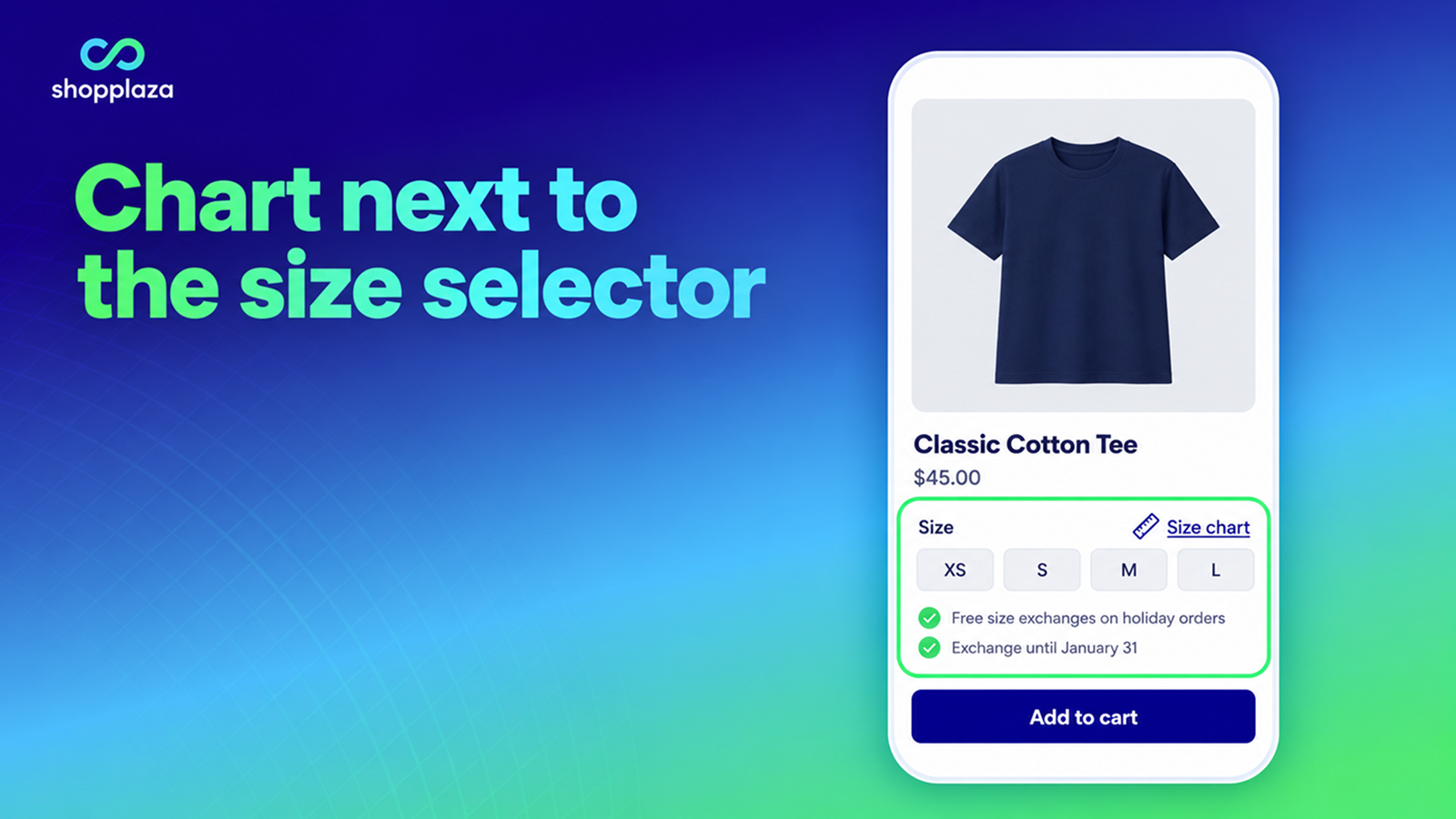
2. Put the size chart next to the size selector, not in a tab at the bottom
A shopper choosing a size should see the chart link within the same screen as the size buttons. On mobile, that means a visible link or button directly under or beside the variant picker, opening in a popup rather than scrolling the shopper away from the add-to-cart button.
Test it on a phone with the product in the cart. If you have to scroll to find the chart, a gift buyer in a hurry will not look for it.
3. Show garment measurements, not just body measurements
Body size charts (“chest 36–38 in = M”) assume the shopper knows the recipient’s chest size. Gift buyers rarely do. Garment measurements (“this sweater measures 21 in across the chest, 27 in long”) let them compare with something in the recipient’s wardrobe.
For apparel, show both. For footwear, show the insole length in cm alongside US, UK, and EU sizes. For rings, include the inner diameter in mm and a printable sizer.
4. Add a size recommender for shoppers who are buying for someone else
This is the item that matters most in the holiday season and least the rest of the year. A size recommender asks for height, weight, and fit preference, or for the recipient’s usual size in a known brand, and returns one recommended size.
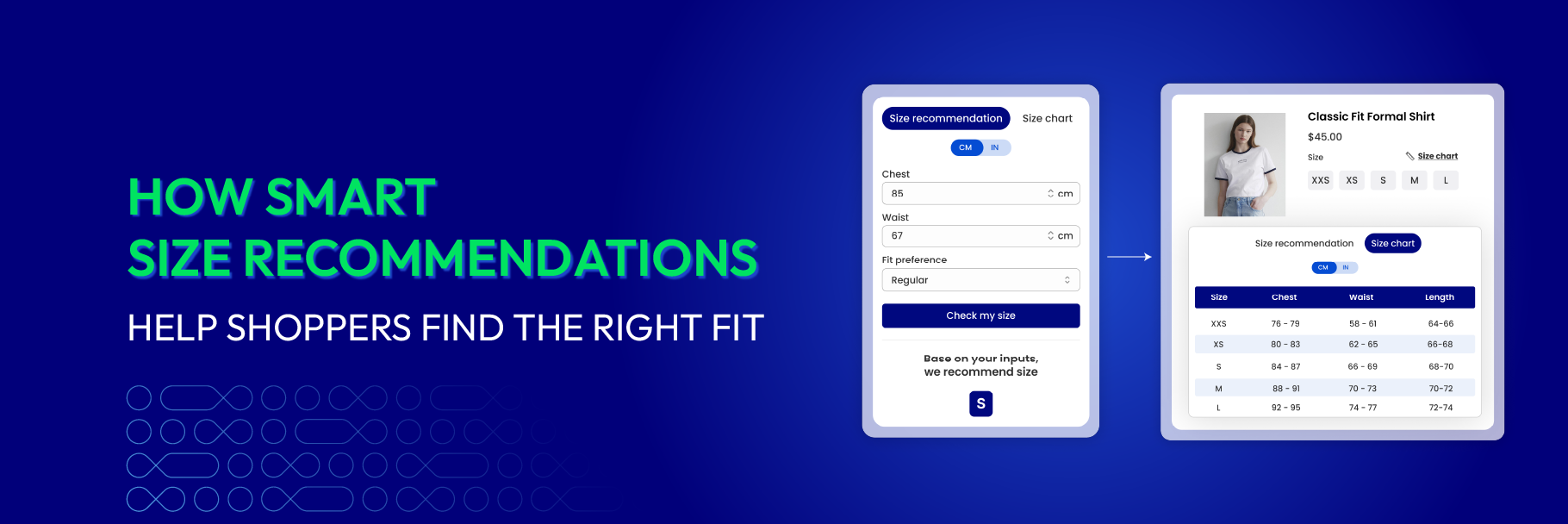
Make the gift case explicit. A one-line prompt such as “Buying for someone else? Enter their height and weight” turns a tool that gift buyers skip into one they use. If the recommender supports brand-to-brand matching (“usually wears M in Brand X”), that is the most gift-friendly input, because buyers often know a brand and size even when they do not know measurements. Our guide to how smart size recommendations help shoppers find the right fit explains what to look for.
5. Add fit notes to every holiday product
One sentence under the size selector does a lot of work: “Runs small, size up for a relaxed fit” or “True to size, fitted through the waist.” Oversized knits, slim jeans, and stretch fabrics need this most, and they are also the most common holiday gifts.
If you sell the same style in slim and relaxed cuts, give each its own chart or fit note. A shared chart for different cuts creates returns in both directions.
6. Show model height and the size worn on every product photo
“Model is 5’9” and wears size S” costs nothing and answers the question most gift buyers actually have: “Would this look like that on her?” Add it to the image caption or the first line of the description, not just the size chart popup.
7. Make exchanges the default, and say so on the product page
A gift buyer who is unsure about size wants to know what happens if it is wrong. Two lines near the size selector change the decision: “Free size exchanges on all holiday orders” and “Holiday orders can be exchanged until January 31.”
Exchanges keep the revenue; refunds do not. Set up your returns flow so exchange is the first option offered, and put the holiday exchange deadline on the product page, the cart, and the order confirmation email.
8. Check unit conversion, size labels, and language for international gift buyers
Holiday traffic from abroad rises, and a UK buyer sending a gift to the US needs to see the size in the system they understand. Confirm that your charts show cm and inches, switch between US, UK, and EU labels, and appear in every language your store sells in. If your store runs multiple languages, charts should be translated along with the rest of the page; see how multilingual size charts work with langify as one example.
9. Test every chart on mobile before the sale starts
Most BFCM traffic is on phones. Open your five best-selling holiday products on a phone, tap the size chart, and check that the table is readable without pinching, the popup closes cleanly, and the add-to-cart button is still reachable. Do the same in Instagram’s in-app browser, since much holiday traffic arrives from social ads.
Then do not touch it again until December. Freeze theme and app changes in the last week before Black Friday.
10. Record a baseline so you can measure January returns
Before the sale, write down: current return rate by category, the share of returns tagged “wrong size” or “fit,” and sizing-related support tickets per week. If your size chart app has analytics, note chart views and recommender uses per product.
In January, compare. Products with high returns and low chart views need a more visible chart; high chart views and still high returns point to the chart itself being wrong or the product running off-size.
What this looks like in practice
Two Shopify stores that did this work before a peak season:
- Loveable, a personalized gifts and apparel store, added size charts and size recommendations and over three months saw conversion rise from 2.1% to 2.7% (+28.5%), apparel return rate fall from 7.2% to 5.9% (−18%), and size-related support tickets drop from 112 to 61 per month. See the full Loveable case study.
- Face 3 Face, a fashion and apparel store with around 6,000 products, went from about 10 sizing support inquiries a month to 0–1 after rebuilding its charts, and attributed $7,000 in revenue to the size chart over 90 days. Details in the Face 3 Face case study.
Neither store changed its return policy. Both changed what shoppers saw before they chose a size.
Holiday return mistakes to avoid
- Shortening the return window for BFCM orders. It reads as a trap in the one season shoppers are most alert to policies. Extend it instead and make exchange the default.
- Launching holiday products without charts because “the collection is small.” Small collections are where gift buyers concentrate.
- Changing charts or apps on Black Friday weekend. A broken popup on the busiest day of the year costs more than any improvement gains.
- Hiding the chart inside a long description tab. If it is not within one scroll of the size selector on mobile, assume it was not seen.
- Treating the gift buyer like the wearer. Body-measurement charts and “find your size” copy assume the shopper is the recipient. Add the “buying for someone else” path.
Need every chart live before Black Friday?
MP Size Chart & Size Guide covers all 10 checklist items from one app, on a free plan with no watermark.
- Assign charts by product, collection, or tag; import in bulk via CSV
- AI size recommender (beta) for shoppers buying for someone else, plus garment and body measurements in one chart
- Floating, inline, or next-to-size display; cm/in conversion, US/UK/EU labels, 20+ languages
- Rated 5.0★ from 876 reviews on the Shopify App Store, Built for Shopify. Switching apps? Migration is free and takes under an hour for most stores.
Conclusion
Holiday returns are decided on the product page in November, not at the returns desk in January. Gift buyers are guessing a size for someone else, return windows are longer, and discounts make bracketing cheap. The answer is not a tighter policy; it is a chart on every sized product, placed next to the size selector, with garment measurements, a size recommender for gift buyers, fit notes, and a visible exchange promise.
Finish the checklist by mid-November, freeze changes before the sale, and record a baseline so you can see in January what worked. For choosing between apps, the best Shopify size chart apps roundup compares the current options, and the Shopify size chart guide covers setup in depth.
Frequently asked questions
How much higher are return rates during the holidays?
NRF and Happy Returns report that retailers expect their holiday return rate to be about 17% higher than their annual return rate. With an annual rate around 16.9% of sales, that puts holiday returns close to one in five orders for many retailers, and higher for apparel.
Why are holiday returns higher for clothing and footwear?
Many holiday orders are gifts, so the buyer is guessing the recipient’s size. Extended holiday return windows also give shoppers more time to decide an item does not fit, and sale pricing makes it cheap to order two sizes and return one.
When should I set up size charts for Black Friday?
Have a chart on every sized product by early November and freeze changes by around November 20. Early gift shopping and pre-BFCM sales start in the first half of November, and you do not want to edit charts or apps during the sale weekend.
Should I shorten my return window for Black Friday orders?
No. 76% of consumers consider free returns a key factor in where they shop, and 67% say a bad return experience would stop them shopping with that retailer again. Extend the window for holiday orders, make exchanges the default, and reduce returns on the product page instead.
How do I reduce returns from gift buyers who don’t know the recipient’s size?
Add a size recommender with a clear “buying for someone else” prompt, show garment measurements that can be compared with an item the recipient already owns, show model height and size worn, and promise free size exchanges on the product page.
What is bracketing and how do I handle it in the holiday season?
Bracketing is ordering several sizes of the same item and returning the ones that do not fit. NRF reports 51% of Gen Z shoppers do it. Clearer sizing and a size recommender reduce the need to bracket; do not punish it with fees during the holidays.
Can a size chart app help with holiday returns, or do I need to change my policy?
A size chart app addresses the cause (the wrong size chosen at checkout), while policy only changes what happens after. For fit-sensitive products, the chart, recommender, and fit notes on the product page are where holiday returns are prevented.
How do I measure whether my size charts reduced holiday returns?
Record return rate by category, the share of returns tagged size or fit, and sizing support tickets before the sale. In January, compare the same numbers and look at chart views per product if your app reports them.